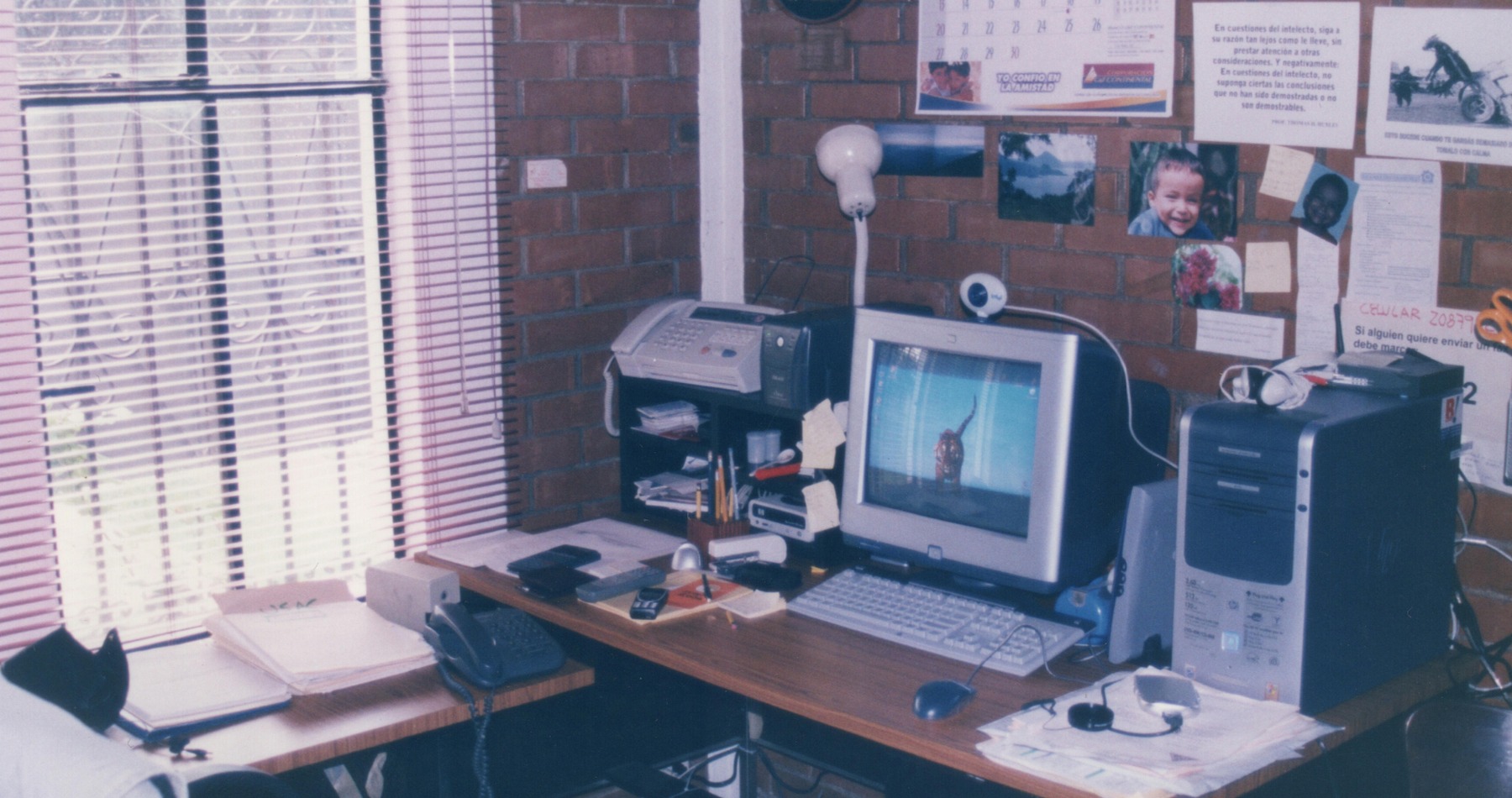
Early 2000s computer workspace

20 Years of Designing Websites in Suffolk: What Small Businesses Have Taught Me

I’ve been designing websites for Suffolk businesses for more than 20 years. Websites have changed almost beyond recognition in that time, but the conversations I have with business owners haven’t changed nearly as much.
People still worry about colours. They still wonder whether their logo is good enough. Quite a few begin by telling me they “only need something simple”. What I’ve learned is that simple is often exactly what they need.
August 2026 10 min read Web Design in Suffolk

Web design looked rather different when I started more than 20 years ago. Computers were considerably bulkier, websites were designed primarily for desktop screens and nobody was worrying about how a page looked on a smartphone.

There was no social media strategy to consider and certainly nobody asking what I thought about AI generated content.

The technology has changed enormously since then. But after more than 20 years working with small businesses, I’m not convinced that what they actually need from a website has changed anything like as much.

A good small business website has never needed to be complicated.

It needs to explain what you do, give people a reason to trust you and make it very easy for them to get in touch.

“I only need a simple website”

I’ve heard this hundreds of times over the years, usually said with a slight apology. There really is no need to apologise.

A plasterer in Suffolk does not automatically need a customer portal. A pub doesn’t need 40 pages. A therapist doesn’t need the latest piece of fashionable web technology just because somebody has decided every website should have it.

Plenty of small businesses need a good brochure website. Something that looks professional, works properly on a phone and answers the questions potential customers are likely to have.

Simple does not mean cheap looking or basic. In fact, making a website appear simple can involve quite a lot of thought behind the scenes.

The interesting bit is often the thing the business owner forgets to mention

One thing I’ve noticed again and again is that people who have been doing something for years often stop noticing what is unusual about it.

Someone might tell me they are a plasterer and give me a perfectly sensible list of services. Then, much later in the conversation, they mention that they work with traditional lime plaster and understand old Suffolk properties. That’s interesting.

The same thing happens with all sorts of businesses. A pub owner concentrates on menus and opening hours but barely mentions the history or character of the place. Someone running a holiday cottage forgets to mention the little things guests repeatedly say they love. A craftsman thinks something that has taken years to learn is perfectly ordinary because they do it every day.

I’ve designed websites for businesses across Suffolk, including trades, pubs, therapists, training companies, holiday accommodation and craftspeople. Finding those details is one of the parts of the job I enjoy most.

Quite often, the best thing I can put on a website is something the client nearly forgot to tell me.

“I haven’t really got any photos...”

This is another familiar one. Then somebody opens their phone.

Suddenly there are photographs of completed jobs, work in progress, the workshop, the pub garden, a particularly difficult project, something made for a customer three years ago and half a dozen pictures they had completely forgotten taking.

Not every photograph will be suitable for a website, of course. Some phone photographs really are best left on the phone.

But I would much rather find a good genuine photograph of the business than automatically fill a website with immaculate stock photography. Real photographs show that the work actually happened. They show the people, places and details that make one small business different from another.

That is difficult to reproduce with a photograph of a suspiciously cheerful group of models gathered around a laptop.

Talking about the business usually works better than “writing website copy”

Asking somebody to sit down and write the text for their new website can have a strange effect. Perfectly normal people who have spent years talking to their customers suddenly start writing things such as “we pride ourselves on delivering a comprehensive range of quality solutions”.

Nobody has ever said that to me in an ordinary conversation.

So I ask questions instead. What do people usually ask when they telephone? What sort of work do you particularly like doing? Is there anything you don’t do? How far do you travel? What do customers misunderstand? What do people normally want to know before they book?

Suddenly there is plenty to say.

Those answers are useful because they are based on real conversations with real customers. They can become service descriptions, FAQs, headings and sometimes whole pages. More importantly, they tend to sound like the business itself.

Suffolk has kept the work interesting

One of the things I’ve always liked about working with small businesses in Suffolk is that I never quite know what the next website will be about.

I can be working on traditional building services one day and a training company, therapist, pub or holiday property the next. Those businesses shouldn’t all end up with essentially the same website with a different logo dropped into the top left corner.

A good website needs to suit the business behind it.

I’m based near Eye and work with businesses throughout the county, including Stowmarket, Framlingham, Woodbridge and the many smaller towns and villages in between.

And being this close to the county border means I’m quite happy to wander into neighbouring Norfolk too.

I’ve seen quite a few web design fashions come and go

We’ve had table based layouts, Flash, websites designed almost entirely for desktop computers, the arrival of responsive design, social media, WordPress everywhere, page builders and now AI.

There have also been periods when everybody apparently needed a slider, enormous photographs, tiny grey writing or things flying onto the screen from several directions.

Some new ideas genuinely improve websites. Others quietly disappear. I’ve learned not to get too excited about something simply because it is new.

The question I come back to is much less glamorous: does this actually make the website better for the person using it?

If an animation adds something without getting in the way, fine. If a booking system saves the business hours of administration, absolutely. If a video explains something better than photographs and text can, use it.

But adding features for the sake of having features rarely improves a small business website. There is, after all, no prize for having the most complicated website in Suffolk.

Local doesn’t mean putting “Suffolk” into every other sentence

Search engine optimisation has become a much bigger part of my work over the years.

For a local business, location obviously matters. If you are a tradesperson working around Bury St Edmunds, for example, attracting somebody looking for the same service in Manchester isn’t terribly useful.

But good local SEO should make sense to the person reading the website too. The areas a business genuinely covers should be clear. Projects and examples should provide useful local context. Pages should answer the things people in that area are actually searching for.

Repeating the word “Suffolk” until everybody is thoroughly sick of seeing it isn’t a strategy.

I can usually tell when a website has been forgotten

This doesn’t require sophisticated analysis.

The copyright date is five years old. The latest news begins “We’re looking forward to 2021”. There is a team member who left several years ago. A telephone number no longer works. Somewhere there is a link leading to a page that vanished long ago.

Individually these things may seem minor. Together they can make a perfectly active business look as though nobody is home.

I don’t think a small business website needs to be constantly redesigned. Quite the opposite. If it is well built, it should last. But it does need looking after.

The website still has to work after the designer goes away

This matters to me more now than it probably did when I first started.

Launch day isn’t the end of a website’s life. It’s the beginning of the part where the business actually has to use it.

Can opening hours be changed? Can a new project be added? Is the hosting sensible? Does the owner know what they are paying for? If something goes wrong, is there an actual person they can contact?

None of that is particularly exciting web design talk. It is, however, rather important when it is your business.

So what have 20 years actually taught me?

Probably not to predict what websites will look like in another 20 years.

If the last 20 are anything to go by, I’d probably be wrong.

Technology will continue changing. AI will change parts of the way websites are created and searched. There will be new devices, new fashions and undoubtedly several things we are all told our websites absolutely must have.

But I suspect the businesses I work with will still need much the same thing: a website that introduces them properly, answers the questions their customers actually ask, gives somebody a reason to trust the person behind the business and makes getting in touch ridiculously easy.

Everything else has to earn its place.

Let’s make it feel like your business, not everybody else’s.

Hungry Sheep creates bespoke responsive websites for Suffolk businesses, with personal support, straightforward advice and more than 20 years of web design experience.

Tell Me About Your Project